To be honest, I used to think eco friendly products were either too expensive, too inconvenient, or simply not as effective as the regular stuff. However, I was wrong on all three counts. In fact, this list is everything I wish someone had handed me when I first started making these swaps. Moreover, there’s no guilt tripping and no preaching just 50 things that genuinely work. It’s practical, straightforward, and easy to follow. As a result, you can start making better choices without feeling overwhelmed.
Here is something nobody really tells you when you start caring about eco friendly products. you do not have to become a different person to live more sustainably. You are not signing up for a lifestyle overhaul. You are just swapping one thing for a better version of that same thing and doing it room by room, at your own pace.
I started with three eco friendly products swap in my kitchen. That was it. To begin with, a beeswax wrap, a reusable produce bag, and a bamboo dish brush. Three things. And within just two months, I had cut my kitchen bin waste by more than half mainly because those three swaps forced me to think differently about everything else I was buying. As a result, even small changes started influencing bigger decisions.
That is the thing about eco friendly products. In fact, they have this quiet ripple effect. As a result, one good swap leads to another. And eventually, before you know it, your home is genuinely greener — while also your grocery bill is lower. Honestly, I did not expect that part, but clearly, here we are.
Why Eco Friendly Products Are Worth Your Attention Right Now
Let me give you one number: the average person throws away roughly 156 plastic bottles per year. Now, that is just bottles — not bags, not straws, not packaging, not all the other stuff. In other words, this is only a small fraction of the total waste. Which means, the actual impact is far bigger than it seems at first glance.
Now multiply that by everyone in your household. Then multiply it by your street. Then your city.
Yeah. It adds up alarmingly fast.
But here is what actually motivates me more than the big environmental picture — the personal economics of it. More importantly, sustainable goods or eco friendly products, when you look at cost per use rather than sticker price, are almost always cheaper. For instance, a safety razor handle costs a bit upfront. However, replacement blades? A few rupees each. By comparison, a pack of disposable razors? You are buying them again next month — and the month after. So ultimately, the math is not complicated.
Here are your 50 best eco friendly products, starting where most waste happens:
Eco friendly Kitchen Products
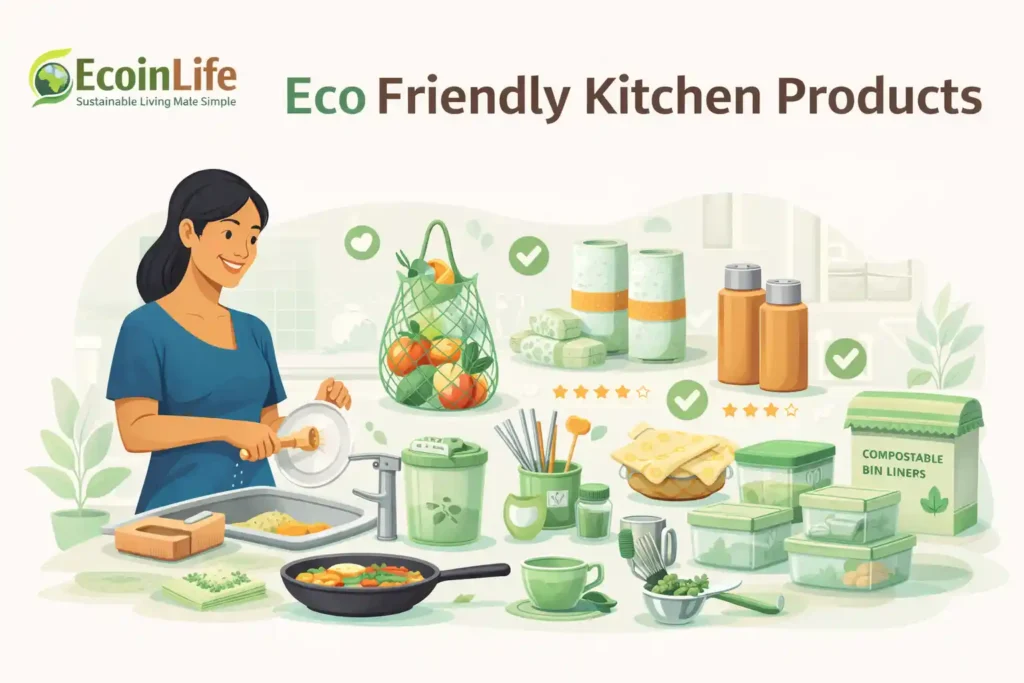
I genuinely think the kitchen is where most people should start. It is where the most obvious, pointless waste happens — things we use for thirty seconds and throw away. These eco friendly products tackle that head-on.
1. Beeswax food wraps
Replaces cling film. Wash with cold water, reuse for up to a year. My personal favourite swap on this entire list.
2. Bamboo cutting boards
Grows back fast, naturally antibacterial, and does not warp like cheap plastic boards do after a few months.
3. Silicone food bags
Everything a zip lock bag does, but instead, you wash it and use it again. In addition, it is dishwasher safe, airtight, and genuinely useful. As a result, you get the same convenience without the waste.
4. Compostable bin liners
Made from plant starch. Breaks down in weeks in a compost environment. Not just a marketing claim they actually work.
5. Stainless steel straws
Simple. Comes with a cleaning brush. Use it for years. Stop buying plastic straws — there is genuinely no good reason to anymore.
6. Bamboo dish brush
Plastic free handle with a replaceable head. When the bristles wear out, you swap just the head not the whole thing.
7. Dish soap bar
No plastic bottle whatsoever. One bar lasts as long as roughly two liquid bottles and works just as well on grease.
8. Reusable coffee filter
Organic cotton or stainless steel. Fits most pour-over setups. Saves you buying paper filters every few weeks.
9. Glass food containers
No plastic chemicals leaching into your food, no staining or warping. Oven safe, microwave safe, freezer safe. Buy once.
10. Swedish dishcloths
One cloth does the job of around 17 rolls of paper towel. Compostable at end of life. I keep four on rotation.
11. Reusable bamboo paper towels
Washable up to 80 times per sheet. Absorbent, durable, and drastically cheaper than buying roll after roll.
12. Cast iron pan
No Teflon, no PFAS, and no frequent replacements when coatings chip. Instead, properly seasoned cast iron works as a naturally non stick solution. In addition, it lasts for years with minimal maintenance. As a result, you save both money and effort over time.
13. Loose leaf tea infuser
Most tea bags contain a thin layer of plastic to seal them. A good infuser eliminates that completely and the tea tastes better.
14. Mesh produce bags
Cotton mesh bags for fruit and vegetables. They fold down to nothing in your bag or pocket. No excuse not to have these.
15. Countertop compost bin
Keeps food scraps from going to landfill. Good ones have an odor sealed lid so you would never know it was there.
Where to start in the kitchen: If you only pick three things from this section, make it the beeswax wraps, the Swedish dishcloths, and the mesh produce bags. Those three will immediately change how you think about the rest of your kitchen habits — in a good way.
Eco Friendly Bathroom Products
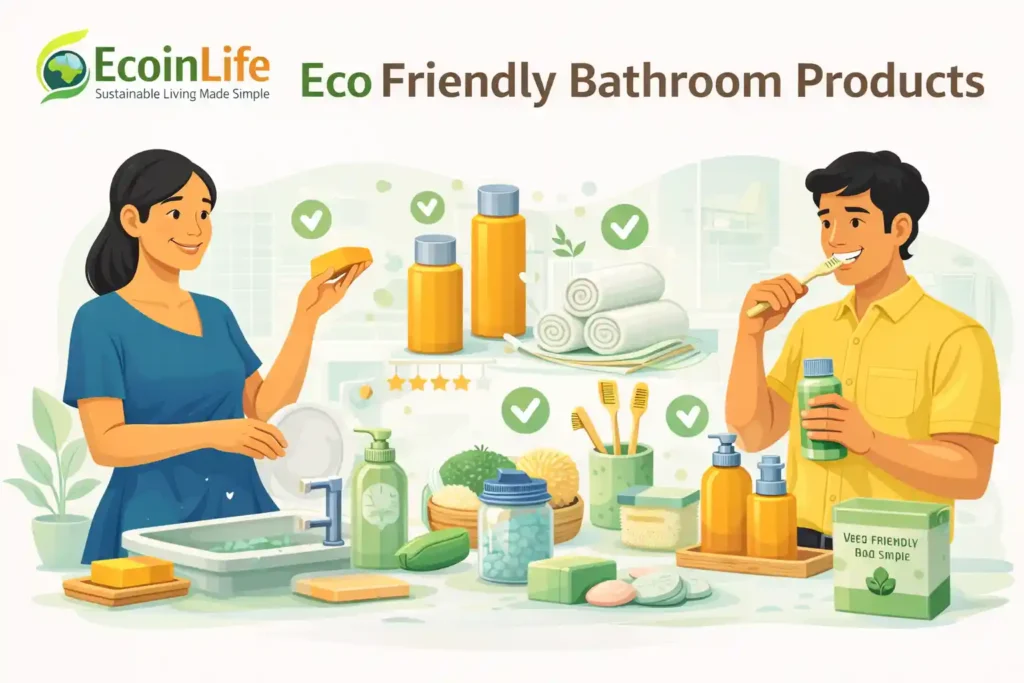
These environmentally friendly products deal with almost all of it.
16. Bamboo toothbrush
The handle is biodegradable. Meanwhile, the bristles are nylon (currently the best option available for bristle performance). Importantly, it works identically to plastic. As a result, you get the same performance with a more sustainable choice.
17. Shampoo bar
Concentrated formula — one bar genuinely equals two to three liquid bottles. It takes about a week to adjust if you have hard water.
18. Conditioner bar
Same idea as the shampoo bar. Compact, long-lasting, and a total lifesaver for carry-on luggage.
19. Safety razor
One handle that lasts your entire adult life. Replacement blades are cheap and fully recyclable.
20. Toothpaste tablets
Zero plastic tubes. Instead, you chew one, it foams, and you brush. At first, it may feel slightly odd for the first two days, but soon enough, it becomes completely normal.
21. Bamboo cotton buds
Paper or bamboo stem instead of plastic. Same result. Fully biodegradable. Honestly, why were we ever using plastic ones?
22. Reusable cotton rounds
Soft, washable pads that replace disposable makeup remover cotton. A pack of seven lasts the whole week between washes.
23. Solid body wash bar
No plastic bottle. Usually made with natural oils that are gentler on skin than the chemicals in most liquid body washes.
24. Biodegradable floss
Silk or corn-based floss in a small refillable glass pot. Works fine. Better for you than the plastic dispensers most people use.
25. Organic cotton towels
No synthetic dyes, no pesticide-grown cotton. They get noticeably softer over the first few washes and last for years.
26. Plastic-free deodorant
Cardboard push-up or glass jar. Does the job. Some people need a short adjustment period — around two weeks — when switching from antiperspirant.
27. Menstrual cup or period pants
Pays for itself within three to four months compared to disposables. Genuinely one of the most impactful swaps on this entire list if it applies to you.
28. Refillable soap dispensers
Buy concentrate in bulk, dilute it yourself, fill your existing dispenser. Cuts plastic use by over 80% instantly.
Eco Friendly Products for Household Cleaning
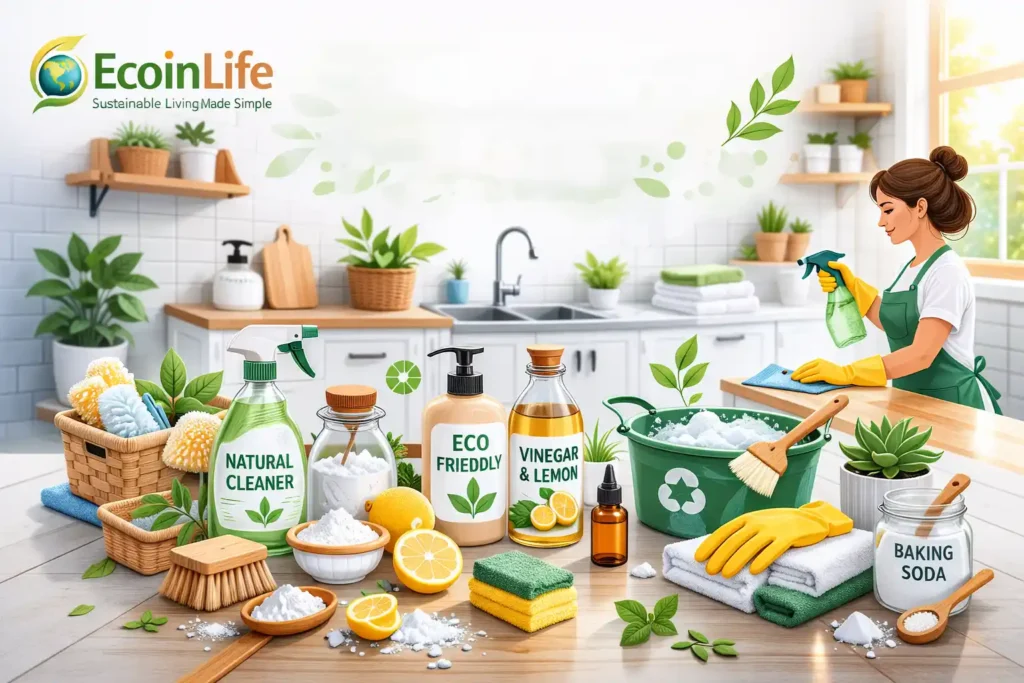
Cleaning products are an interesting one because people assume the harsh chemicals are doing something important. However, for most everyday cleaning tasks, they are not. In reality, plant-based formulas get your kitchen and bathroom just as clean while also avoiding anything problematic going down your drains.
At the same time, the packaging situation with conventional cleaners is genuinely absurd when you think about it — a product that is 90% water, shipped in a single-use plastic bottle, used once, and thrown away. In other words, you are essentially paying to transport water in plastic. Because of this, the inefficiency becomes obvious. As a result, it raises serious questions about how necessary this model really is.
In other words, you are paying to transport water in plastic over and over again. Because of this, the inefficiency becomes hard to ignore. By contrast, concentrate tablets solve that whole problem. As a result, you reduce both waste and unnecessary cost in one simple switch. Ultimately, it is a far more logical and efficient approach.
29. Cleaning concentrate tablets
Drop one tablet in your existing spray bottle with water — that is it. In other words, no new plastic bottle. Ever. As a result, this one switch alone is transformative.
30. Plant-based all-purpose spray
For those who prefer a ready-made option — even then, these clean just as well as conventional sprays and are safe around children and pets. Additionally, they offer convenience without compromising on safety or effectiveness.
31. Laundry strips
Pre-measured dissolvable strips. No heavy plastic jug of detergent. Works in cold water. Ships in a cardboard envelope.
32. Wool dryer balls
Replaces dryer sheets completely. A set of six lasts for thousands of loads. Add a few drops of essential oil if you like a scent.
33. Natural toilet bowl cleaner
Citric acid-based. Works on limescale and staining without the bleach fumes you have to open windows to escape from.
34. Loofah scrubbers
A loofah is literally a gourd grown in the ground, dried, and used for scrubbing. In fact, when it wears out, you simply put it in the compost. As a result, there is no waste left behind.
35. Natural cellulose sponges
Standard synthetic sponges shed microplastics into your drain every time you use them. Cellulose sponges do not. Same scrubbing power.
36. White vinegar in bulk
Cuts through limescale, cleans glass streak-free, freshens drains, and deodorizes. Buy a large bottle and dilute it yourself — costs almost nothing.
37. Refillable mop system
One handle with replaceable mop heads. It sounds simple — and in fact, it is. Instead of throwing away an entire mop every time the head wears out, you just replace the head. As a result, you reduce waste while keeping the same functionality.
Recommendation: Start with the concentrate tablets and laundry strips. Those two swaps alone eliminate most of the plastic your cleaning routine generates. Everything else is a bonus.
Eco friendly Products for On-the-Go
Sustainability does not have an off switch when you leave the house. In fact, these sustainable goods cover the most common out-of-home waste situations — the ones that often catch you off guard when you have not planned ahead. Because of this, you can stay prepared even when you are on the go. At the same time, they help you avoid last-minute, wasteful choices. As a result, your habits remain consistent wherever you are. In other words, sustainability becomes part of your routine, not just something you practice at home. Ultimately, it is about staying consistent, even outside your home.
38. Stainless steel water bottle
I genuinely cannot overstate how much this one matters. In a country with the climate we have, most people are buying bottled water constantly. A good insulated bottle keeps water cold for 24 hours. You buy it once. That is the whole story.
39. Reusable coffee cup
A lot of café chains now give you a small discount for bringing your own — which means this thing actually pays you back over time. Even the ones that do not offer a discount, you still get to feel quietly smug about it.
40. Foldable tote bag
Keep one folded up in whatever bag you carry daily. You will never need a plastic carrier bag again, and you will stop doing that awkward juggling act with five bags cutting into your fingers.
41. Bamboo travel cutlery set
A small pouch with fork, knife, spoon, and straw. Fits in any bag. For anyone who eats lunch away from home, this is a genuinely useful thing to have.
42. Beeswax snack wraps (travel size)
Identical to the kitchen version, but useful for packing food when you are out. Works on sandwiches, fruit, cheese — basically anything you would otherwise wrap in plastic film.
43. Solar-powered charger
Niche, I know — but incredibly useful if you spend time outdoors or travel frequently. Charges your phone using sunlight. No socket, no power bank charging cycle.
44. Recycled material backpack
Several well-known brands now make bags from recycled ocean plastic. They are durable, they look good, and they are a genuinely meaningful use of what would otherwise be floating somewhere it should not be.
Eco Friendly Products for Home Office and Living Room
These are the rooms most people overlook in their sustainability thinking. Which is fair enough — they do not feel as obvious as the kitchen or bathroom. But small changes here add up over a year in both environmental and financial terms.
45. Recycled paper notebooks
Made from post-consumer waste paper. Write exactly the same as regular paper. Often priced the same or cheaper than mainstream brands.
46. Refillable pens
One pen body, multiple ink cartridges over its lifetime. The amount of plastic from throwaway pens that ends up in bins is genuinely staggering when you add it up.
47. LED smart bulbs
Use around 80% less electricity than old incandescent bulbs and last up to 25 years. The upfront cost pays back on your electricity bill within a year in most households.
48. Smart power strips
Devices on standby still draw power — sometimes quite a lot of it. Smart strips cut that phantom drain automatically. One strip can reduce your standby energy use significantly without you doing anything.
49. Organic cotton soft furnishings
Cushion covers, throws, pillow cases. Free of the synthetic dyes and pesticide-grown cotton that can affect indoor air quality over time. Softer too, in my experience.
50. Secondhand furniture
I am putting this last because it is not a product you buy — it is a mindset. The most sustainable piece of furniture is the one that has already been made. Buying secondhand keeps things out of landfill, saves trees, and usually saves you a significant amount of money.
How to Actually Do This Without Burning Out
The approach I recommend and the one that has worked for everyone I know who has stuck with it — is embarrassingly simple. Essentially, when something runs out or wears out in your home, replace it with a better version from this list. That is it. Importantly, you are not throwing away things that still work, and at the same time, you are not making dramatic purchases all at once. Instead, you are simply making a smarter choice the next time you need to buy something anyway. In other words, you are upgrading gradually, not overhauling everything overnight.
Over time, that approach transforms your home. Quietly. Without stress. More importantly, without spending significantly more money than you already would have. As a result, the process feels natural and sustainable. In the long run, it becomes a system you can stick to rather than a short-term effort.
A thought worth keeping: You do not have to be a perfect eco warrior to make a real difference. If ten million people make three imperfect swaps each, that matters far more than a small group of people living completely zero-waste lives. Your imperfect effort is worth something. Start there.
Pick two things from this list that feel easy. Order them. Use them. Once they become normal — which happens faster than you would expect — pick two more. That is the whole system.
FA Q’s About Eco Friendly Products
Eco Friendly Products Pricing: Are They Really More Expensive?
Some cost more upfront, yes. A safety razor costs more than a pack of disposables. But replacement blades cost a fraction of replacement cartridges, and you buy them far less often. Most eco friendly products follow this pattern higher initial cost, much lower cost over time. After the first few months, most people find they are spending less, not more.
What are the most impactful eco friendly products swap to make first?
If I had to pick five: a reusable water bottle, a shampoo bar, a bamboo toothbrush, beeswax wraps, and a safety razor. Those five alone eliminate hundreds of single-use plastic items per person per year. They are also all easy to use . there is no real learning curve with any of them.
Do plant-based cleaning products actually clean properly?
For everyday cleaning — worktops, sinks, bathroom surfaces, glass — yes, absolutely. For tougher jobs like heavy limescale buildup or deep grease, you might need to leave the product on for a minute or two longer than you would with a chemical cleaner. But the result is the same. The fumes are nonexistent, which is a nice bonus.
Where can I find environmentally friendly products without overpaying?
Most major supermarkets and online marketplaces now stock a solid range of sustainable alternatives. You do not need to shop at specialist eco stores to access these products anymore. Buying in bulk where possible — especially for things like laundry strips and cleaning concentrates — brings the per-use cost down significantly.
Is bamboo genuinely sustainable or is it just marketing?
Bamboo itself is genuinely one of the most sustainable plant-based materials available. It grows extraordinarily fast, requires no pesticides in most growing conditions, and needs very little water.
How many eco friendly products swap should I make at once?
Honestly? To begin with, two or three at a time is plenty. Otherwise, you are dealing with too many adjustments simultaneously, some of which, in fact, have a short learning curve. So, get comfortable with a small batch, then let them become routine, and only after that, add more.
Ultimately, this is how habits actually stick not through dramatic overhauls, but rather through steady, manageable changes.