
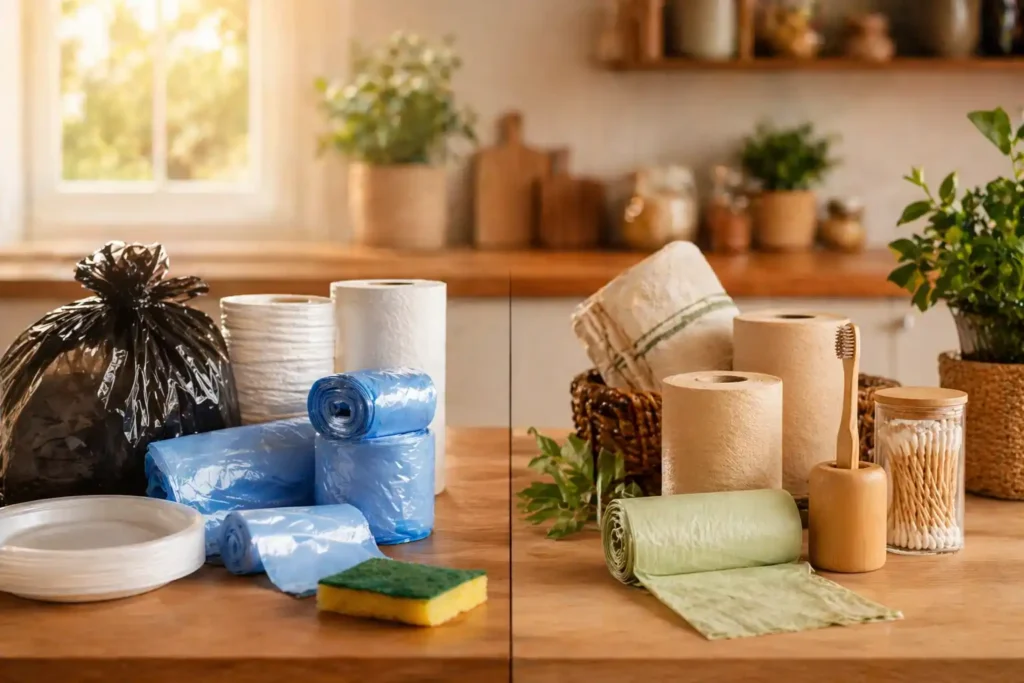
What if the cheapest option in your cart is actually the most expensive decision you’ll make this month? Most people never find out. They see ₹12 for a pack of thirty garbage bags and call it a win — however, right up until the bag splits, the cabinet needs scrubbing, they’re buying another pack two weeks later. Again. That’s not saving money. That’s paying for the same problem on repeat. This is the real story of cheap vs. sustainable products in Indian homes. Not an eco-lecture. Just math — sitting quietly on your kitchen counter, waiting for you to notice it.
The Real Cost of Cheap Products Nobody Talks About
Here is what the price tag on a cheap product does not show you.
For instance, it does not show how many times you will need to buy it over the course of the year. Likewise, it does not account for the replacement cost when it fails early. Moreover, it overlooks the disposal cost — including your time, your municipal system’s resources, and the environmental processing that happens downstream of your bin.
Therefore, cheap products are designed around a single transaction, whereas sustainable products are built around a full use cycle. As a result, these represent two completely different economic models. In fact, comparing their sticker prices is like comparing the cost of a bus ticket to the cost of a bicycle. At first glance, one seems cheaper; however, that perception quickly changes once you consider how many bus tickets you end up buying over the course of a year.
Furthermore, cheap products have what economists call hidden costs — costs that exist but do not appear on the receipt. A cheap plastic scrubber sheds microplastics into your drain water every time you use it. That microplastic enters water systems, accumulates in fish, and eventually re-enters human food chains.
Sustainable products, on the other hand, tend to externalise far fewer hidden costs. That is, in fact, a large part of what makes them sustainable. That is actually a large part of what makes them sustainable in the first place.
Sustainable Products vs Cheap Products — The Honest Numbers
Let us run actual rupee comparisons. Not estimates. Not marketing claims. Real numbers from products available in India right now.
Kitchen Bin Bags
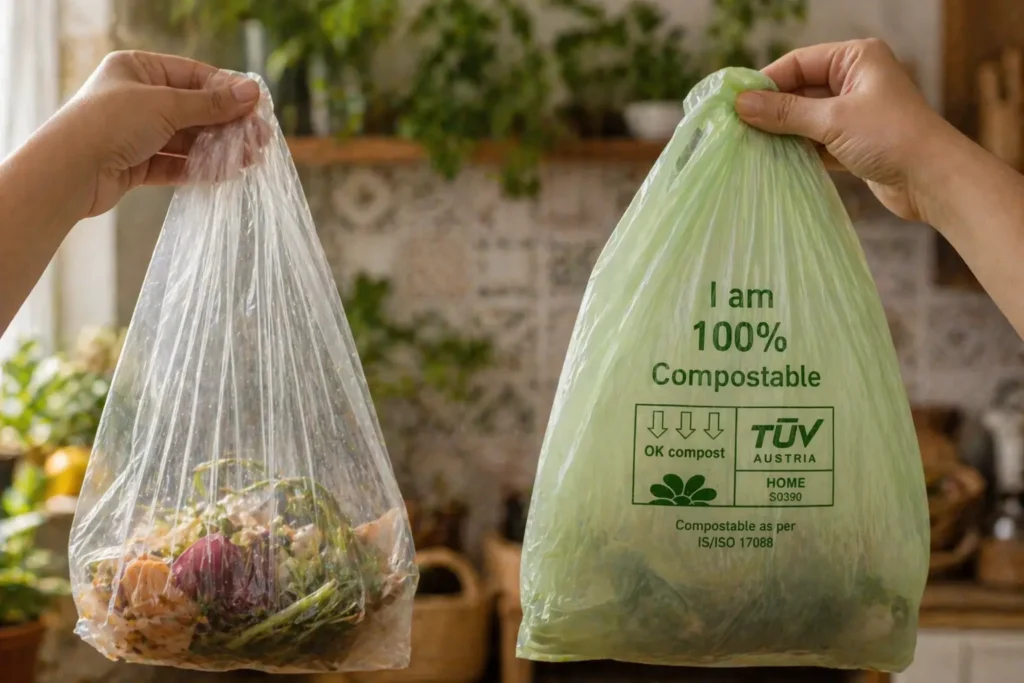
Cheap plastic bags: A standard pack of 30 bags costs ₹12–15. An average Indian kitchen uses 2–3 bags per week. That is roughly ₹100–130 per year.
Sustainable products: A pack of 30 compostable bags costs ₹180–220. However, the same usage pattern applies 2–3 per week so annual cost is ₹720–880
Wait. That looks more expensive. Indeed, it’s, in pure rupee terms.
However, here is what changes the calculation. Maharashtra, Tamil Nadu, and Karnataka all have active plastic bag restrictions. Disposal of non compostable bags creates municipal processing costs that eventually feed back into taxes and civic fees.
Additionally, compostable bags from Indian manufacturers have been closing the price gap rapidly. For example, some brands now sell at ₹120–140 per pack, bringing annual cost to ₹480–560 — much closer to plastic.
At present, the case for sustainable products especially for items like bin bags is not purely financial in India. Instead, it is a combination of financial, regulatory, and environmental factors. Taken together, this creates a compelling argument. Meanwhile, the purely financial case in terms of rupees is also strengthening year by year.
Kitchen Towels — Where Sustainable Products Win Clearly
This one is not even close. In fact, it is the clearest category where sustainable products win most clearly.
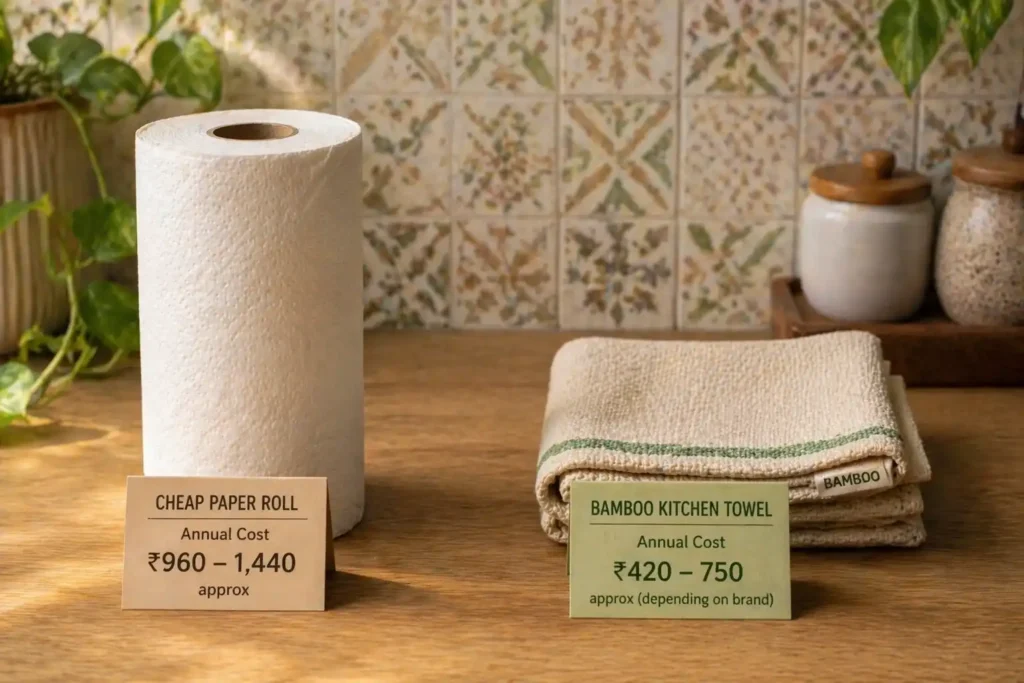
Cheap paper rolls: A standard kitchen roll in India costs around ₹80–120. Typically, most households use one per month; therefore, the annual cost comes to ₹960–1,440. In addition, this also means disposing of twelve plastic-wrapped cardboard tubes in the bin every year.
Sustainable products — reusable bamboo kitchen towels: By contrast, a good pack costs around ₹350–500. Typically, one pack handles 80–100 machine washes; as a result, it lasts roughly 8–10 months at a minimum. Consequently, the annual cost comes to about ₹420–750, depending on the brand.
Moreover, bamboo kitchen towels absorb more liquid than paper. They resist bacterial growth better than cotton in India’s humid climate. They do not disintegrate mid-wipe the way cheap paper rolls sometimes do when the paper is thin.
The sustainable product costs less annually. Performs better. Produces less waste. This is the category where the financial case is completely clear — and it is why this is usually the first switch Indian households make when they start moving toward sustainable products.
Toothbrush – The Numbers Are Identical

Cheap plastic toothbrush: ₹30–80 depending on brand. Replace every 3 months. Annual cost: ₹120–320.
Sustainable products — bamboo toothbrush: ₹40–90 depending on brand. Replace every 3 months. Annual cost: ₹160–360.
The price difference is negligible. Sometimes it is zero. However, the difference is that the plastic handle will sit in a landfill for 400 years. The bamboo handle biodegrades in months.
In this case, the sustainable swap costs roughly the same as the cheaper alternative. Therefore, from a purely financial standpoint, there is little to no reason to avoid making the switch. In fact, it becomes an easy decision when you also consider the added environmental benefits.
Toilet Paper – The Calculation Indian Consumers Are Getting Wrong
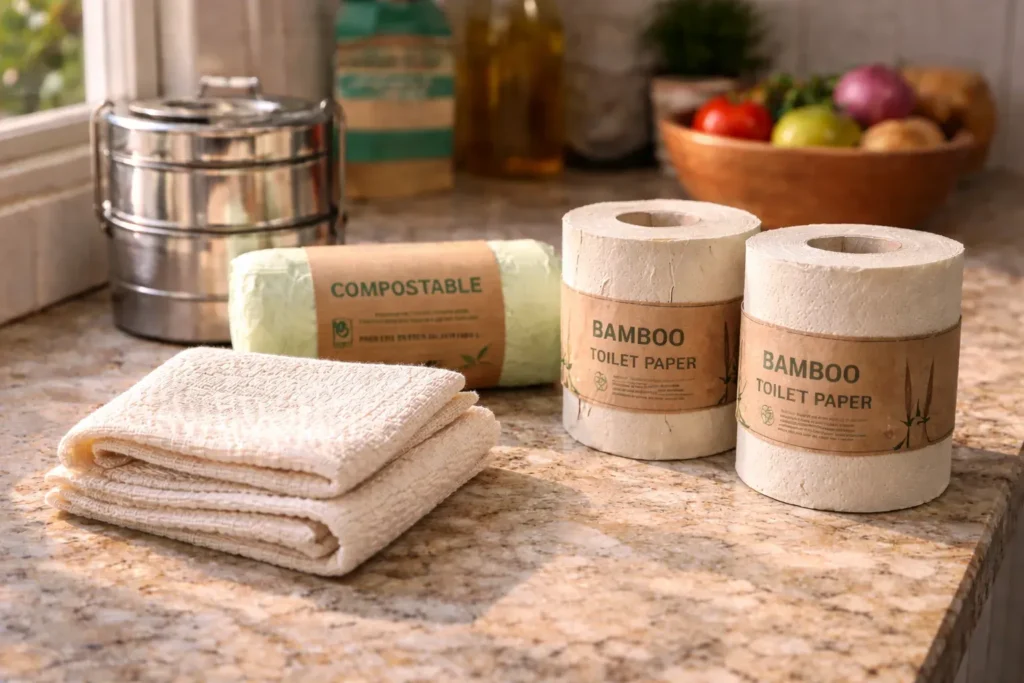
Cheap conventional toilet paper: ₹3–5 per roll for the most basic Indian brands. Most households use 2–3 rolls per week. Annual cost: ₹300–780.
Sustainable products — bamboo toilet paper: ₹15–25 per roll from Indian brands on subscription. Same usage. Annual cost: ₹1,560–3,900.
Here sustainable products cost more. Meaningfully more. This is not a gap that closes with bulk buying or subscription discounts alone.
However, consider what that cost difference pays for. Conventional toilet paper starts with trees — trees that take 30 to 100 years to grow. Bamboo grows back in months, needs no pesticides, and requires significantly less water to process. Furthermore, organic bamboo toilet paper contains no bleaching chemicals, which means less skin irritation for Indian consumers in humid climates — a benefit that shows up fast.
Therefore, the honest answer here is: bamboo toilet paper is better for the environment and often better for your skin. It costs more. Decide accordingly based on your budget. Sustainable products do not have to be an all-or-nothing switch.
Why Gen Z Is Choosing Sustainable Products — And It Is Not Just Values

Something interesting is happening with Indian Gen Z and sustainable products right now.
It is not what the marketing industry thinks it is.
For example, the common assumption has always been that young people choose sustainable products because they care about the planet. And many do. But that is not the primary driver of the actual purchasing shift. The primary driver is surprisingly skepticism.
Gen Z has grown up with information. For instance, they have seen greenwashing. They have watched brands slap “eco” on a product and charge double for it. They have read enough to know that a biodegradable claim without certification means nothing. As a result, consequently, they are better at identifying genuine sustainable products than any previous generation of Indian consumers.
Additionally, Gen Z in India is the first generation dealing with the visible consequences of cheap-product culture at scale. Drain flooding every monsoon. Rivers that cannot be swum in. Landfills visible from highways
Consequently, the sustainable products shift among Indian Gen Z is partly values-based and partly just this is the world we actually live in, and cheap products helped create it. That combination is more durable than pure values alignment, which can waver. Lived experience does not.
The Hidden Savings Nobody Counts
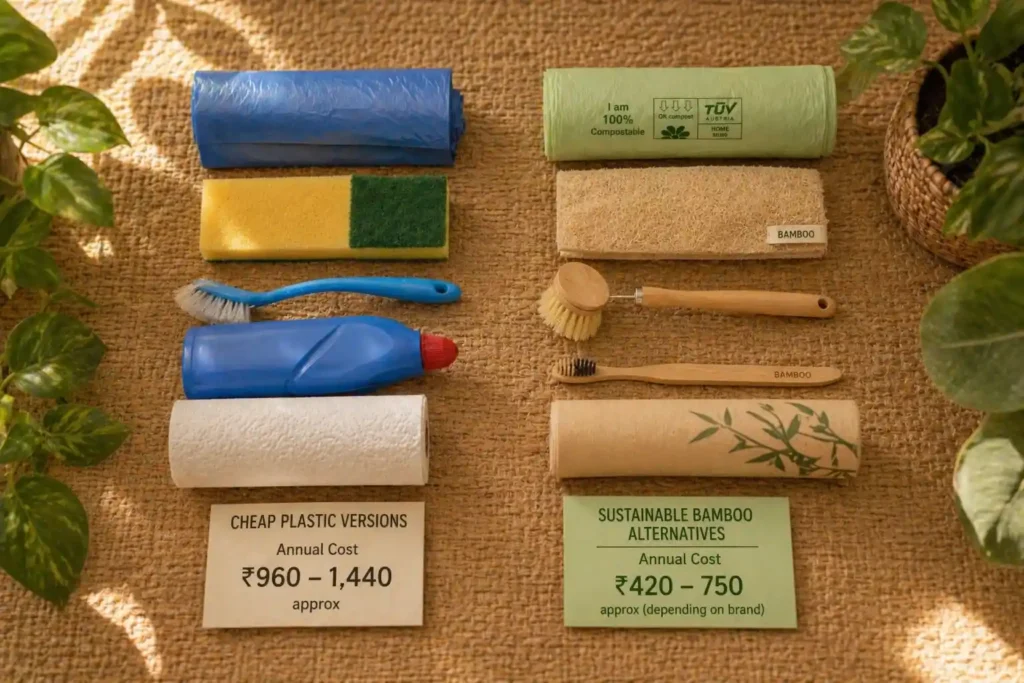
Beyond the direct cost comparison, sustainable products create secondary savings that rarely appear in any analysis.
Health savings. For instance, conventional cleaning products contain phosphates and synthetic chemicals. Eco-friendly alternatives skip these. For Indian households with young children or members with skin conditions, the switch to natural sustainable products can reduce spending on antihistamines, skin creams, and related medical visits. This is hard to quantify precisely. Nevertheless, it is not zero.
Replacement frequency. Additionally, cheap products fail sooner. For instance, a cheap plastic scrubber lasts 3–4 weeks before it starts falling apart. A quality natural fibre alternative lasts 6–8 weeks. Similarly, a cheap plastic water bottle needs replacing when the lid cracks or the plastic degrades. A steel or glass alternative lasts years. Sustainable products often cost more per unit and far less per year of actual use.
Mental load savings. Furthermore, this sounds soft. It is not. Moreover, running out of bin bags, paper rolls, scrubbers repeatedly — and making those small purchases repeatedly — has a real cognitive cost. Buying sustainable products that last longer and need less frequent replacement reduces that mental load. Time is money in a way that household supply runs make very literal.
How to Start Switching to Sustainable Products Without Overspending
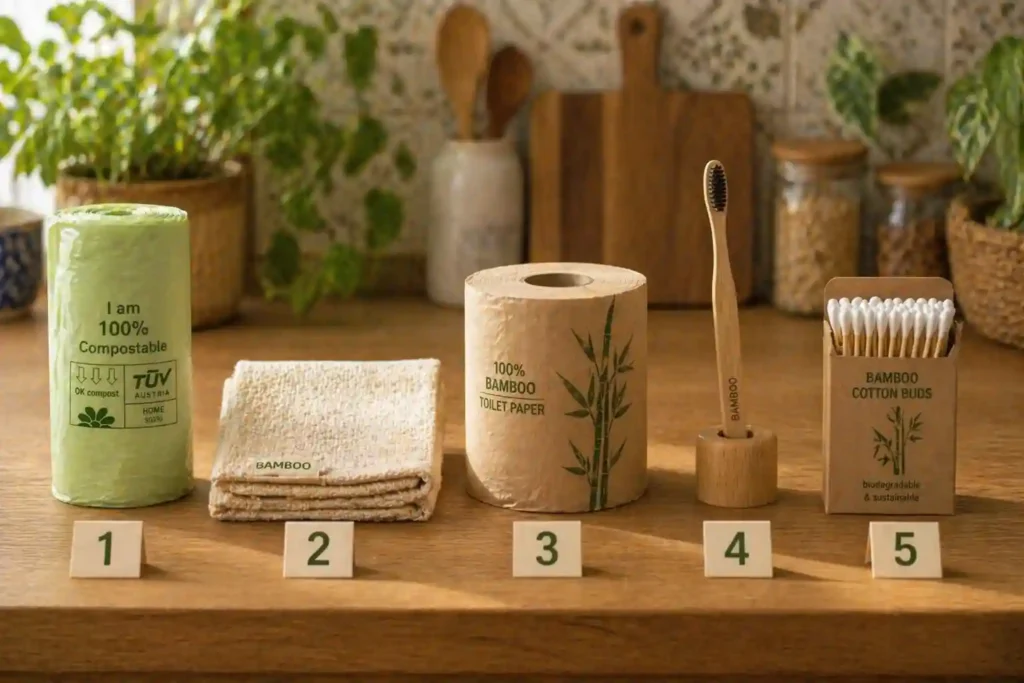
The mistake most people make, however, is trying to switch everything at once.
They read about sustainable products, get motivated, spend ₹3,000 in one go on eco-friendly alternatives for every product category, and then feel the financial pressure and scale back.
Therefore, start with the swaps where sustainable products are financially equal or better. Kitchen towels first the math’s is clearly in your favor. Toothbrush next the price is identical. Cotton buds bamboo versions cost the same or less. Cleaning products in concentrated refillable form reduces plastic and often reduces per-use cost.
Therefore, as you see the savings from those categories accumulate, use them to subsidise the categories where sustainable products still cost more.
For instance, savings from bamboo kitchen towels over a year roughly ₹500–700 can cover the price difference on bamboo toilet paper for three months. The ecosystem of sustainable products funds itself if you sequence the switches correctly.
What Cheap Products Actually Cost the Planet And Why That Bill Comes Back
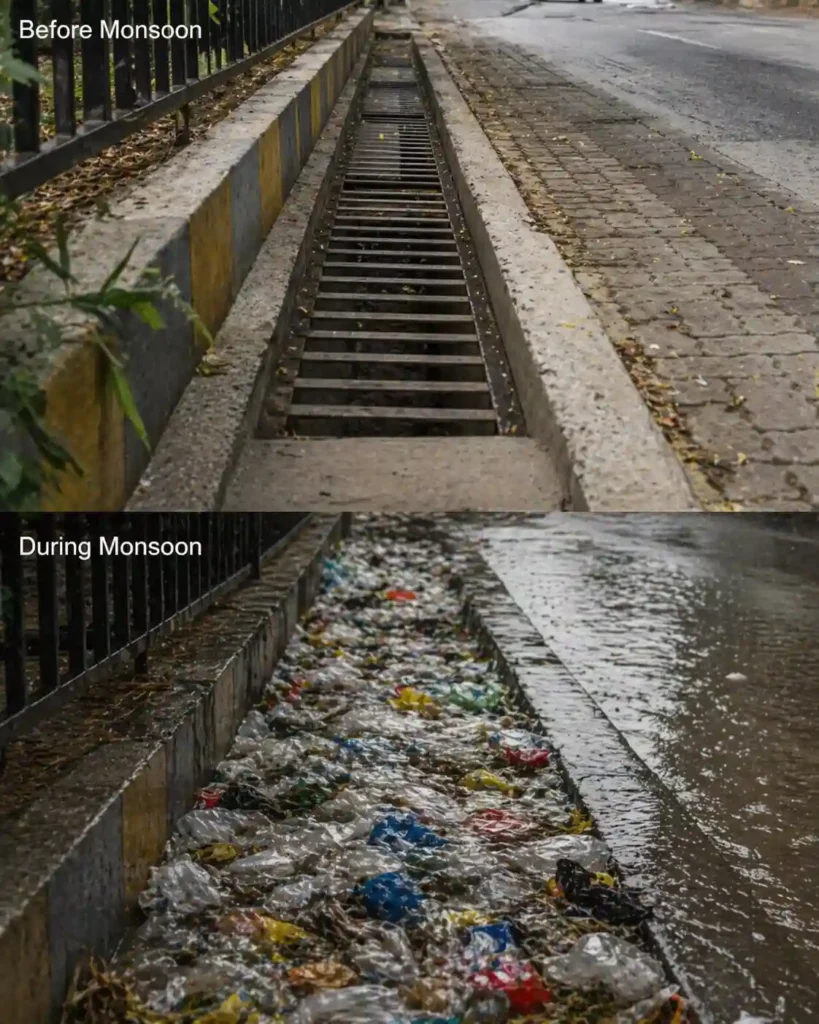
The financial case for sustainable products is strong. However, it is incomplete without acknowledging the environmental cost of cheap products because that cost does not disappear. It just gets distributed differently.
For example, India generates over 62 million tonnes of solid waste annually. In fact, a significant portion is single use plastic from household sources. Cheap plastic products are the primary input to that number.
Consequently, that waste costs money to process money that comes from municipal budgets, which come from taxes. Furthermore, plastic that escapes the waste system enters rivers and drains contributing to the monsoon flooding that costs Indian cities billions in damage annually.
In other words, the cheap product was cheap at the point of purchase. The cost was not eliminated. It was deferred and distributed across the municipal system, the water system, and ultimately the tax base.
Sustainable products internalise more of their true cost at the point of purchase. That is why they appear more expensive. However, that higher price is closer to the actual cost of producing a product responsibly rather than externalising the environmental processing cost onto everyone else.
Sustainable Products Worth Switching To Right Now
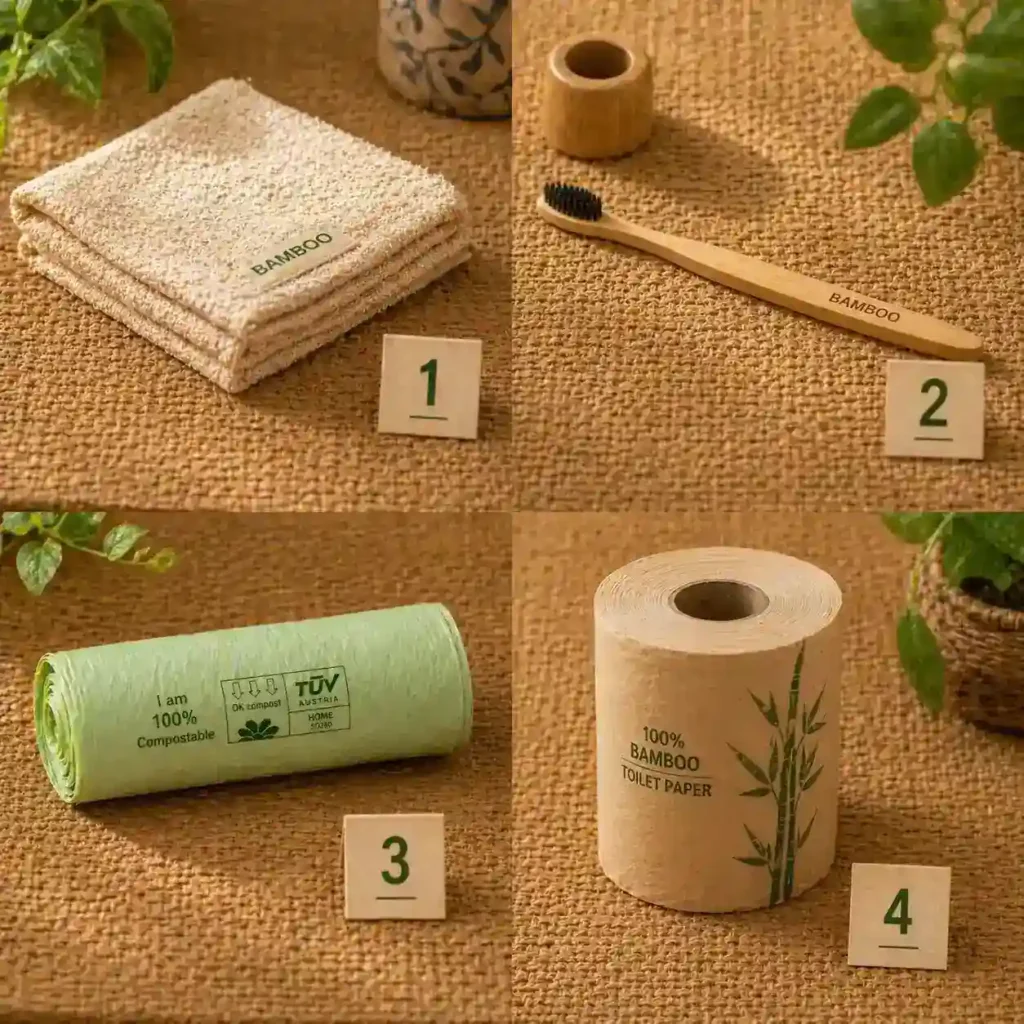
Based on financial savings, environmental impact, and ease of switching, here is the sequence that makes most sense for an Indian household in 2026:
Reusable bamboo kitchen towels : Sustainable products that, moreover, cost less annually than paper rolls while performing better. Zero downside.
Bamboo toothbrush and bamboo cotton buds : Sustainable products priced identically to conventional alternatives.
FAQ : Cheap vs Sustainable Products in India

Are sustainable products always more expensive than cheap ones?
No. In fact, in several categories bamboo toothbrushes, bamboo cotton buds, reusable kitchen towels. sustainable products now cost the same or less than conventional alternatives on an annual per-use basis. However, the price premium exists in some categories and is disappearing in others as Indian manufacturing scales up.
Which sustainable product saves the most money?
Reusable bamboo kitchen towels generate the clearest annual saving for most Indian households typically ₹300–700 per year compared to paper rolls, while also performing better.
Is it worth switching to sustainable products on a tight budget?
Yes, start with the financially equal swaps. For instance, bamboo toothbrushes and cotton buds cost roughly the same as their conventional counterparts. Meanwhile, reusable kitchen towels begin to save money within the first three months. As a result, the most impactful early switches require little to no additional spending.